 Nova Hair
 Hand-Tied vs Machine Weft: A Salon's Guide
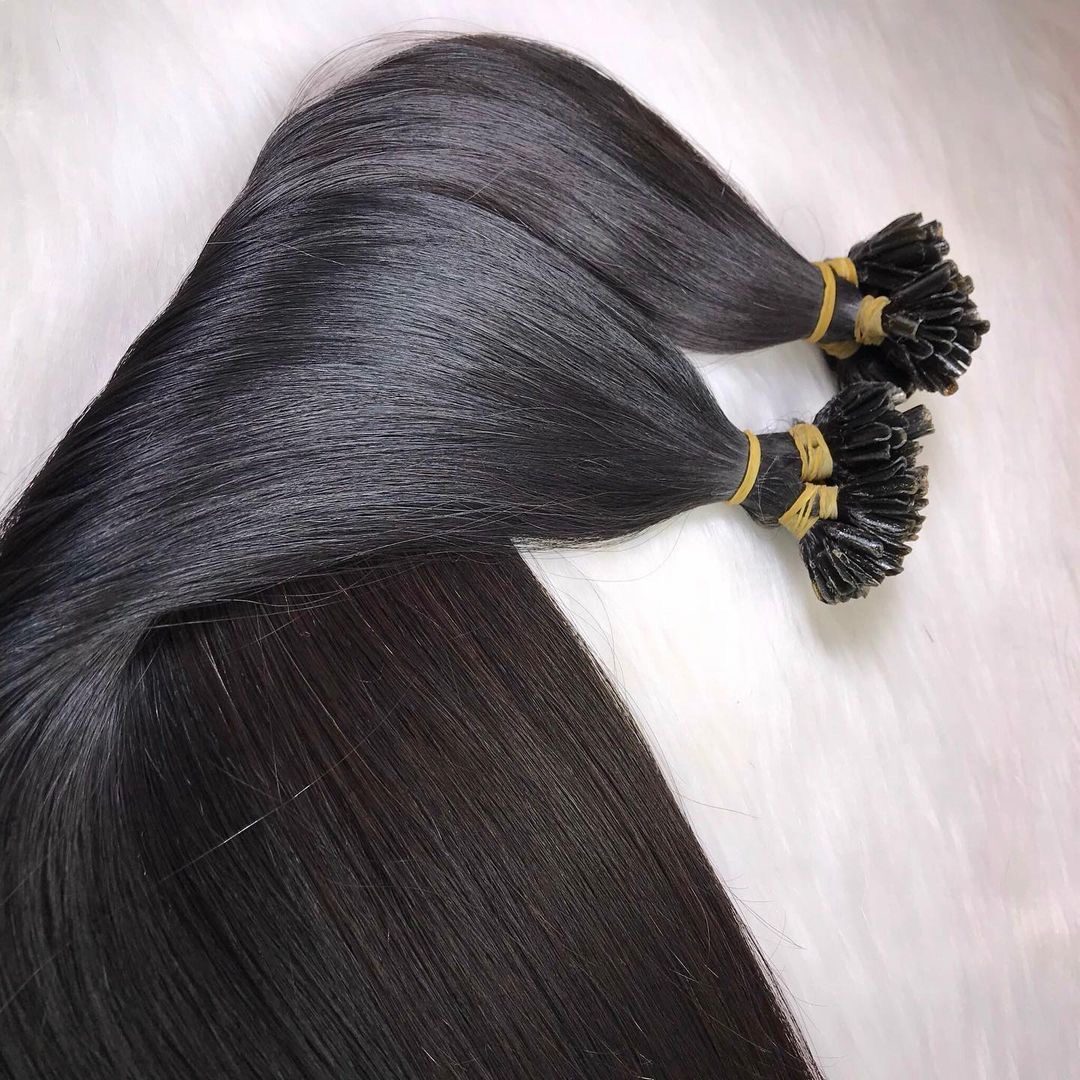
Hand-tied weft is thinner and lies flatter for discreet bead-and-sew installs, while machine weft is thicker, stronger, and cheaper for traditional sew-ins and wig making. Choose hand-tied when the client cannot show any bulk at the root, and machine weft when durability and price matter more than an invisible seam. Both are made from the same quality hair; the difference is how the weft is built.
The short version for a busy stylist: hand-tied weft has a fine, flexible seam sewn by hand that sits flat under a single row of beads, but it cannot be cut without unravelling. Machine weft has a strong continuous seam sewn by machine that never sheds at the seam and can be cut to length, but it is bulkier. Your install method and your client’s hair density decide the winner.
What is machine weft?
Machine weft is hair sewn into a long continuous weft by machine, with a strong stitched seam that locks every strand. It is the most durable weft construction because the machine stitch does not shed at the seam, and it can be cut anywhere along its length without unravelling, which makes it the workhorse for traditional sew-ins and wig making. The trade-off is thickness: the seam is heavier than a hand-tied one, so it sits slightly more raised under the hair. Nova produces machine weft with a thin flat return to reduce that bulk.
Best for: traditional sew-ins, wig construction, clients with thick natural hair, and resellers who want durability and a lower price per piece.
What is hand-tied weft?
Hand-tied weft is hair knotted strand by strand into a thin, flexible weft with no bulky machine seam, so it lies flatter against the head than any other weft. Extension specialists use it for bead-and-sew installs where the client wants no visible bulk, typically sewn onto a row of beads. Genius weft is a related hand-made construction that, unlike standard hand-tied, can be cut to width without fraying. The trade-off is durability and price: a hand-tied seam is more delicate and the hand labour makes it cost more. Nova’s hand-tied and genius weft is made for salons that need the thinnest possible seam.
Best for: premium bead-and-sew installs, fine-haired clients who would show a machine seam, and salons whose clients pay for an invisible result.
Hand-tied vs machine weft: the comparison
| Factor | Hand-tied weft | Machine weft |
|---|---|---|
| Seam | Thin, flexible, hand-knotted | Thick, strong, machine-sewn |
| Lies | Very flat, discreet | Slightly raised |
| Cutting | Cannot cut standard hand-tied (genius weft can) | Cut anywhere |
| Durability | More delicate seam | Most durable, no seam shedding |
| Install | Bead-and-sew rows | Sew-in, wig making |
| Price tier | Higher (hand labour) | Lower |
| Best client | Fine hair, wants invisible | Thick hair, wants durability |
Which weft should you choose?
Match the weft to the client’s hair and the result they are paying for. A fine-haired client who cannot show any root bulk needs hand-tied, and will pay for it. A client with thick, dense hair who wants a durable install at a reasonable price is better served by machine weft. Many salons stock both and decide per client, which is the approach we would recommend over committing to one. Whichever you install, the extensions still apply sustained tension, so follow the American Academy of Dermatology’s guidance and give clients a break from extensions every two to three months to protect against traction alopecia.
For how these wefts compare against keratin tips and tape-ins, see our full guide to hair extension methods.
Frequently Asked Questions
What is the difference between hand-tied and machine weft?
Hand-tied weft is knotted by hand into a thin, flexible seam that lies flat for discreet installs, while machine weft has a thick, strong machine-sewn seam that is more durable and can be cut to length. Hand-tied suits fine hair and invisible results at a higher price; machine weft suits thick hair and durability at a lower price.
Which lasts longer, hand-tied or machine weft?
Machine weft is more durable because its machine-sewn seam does not shed and can be cut without unravelling, while a hand-tied seam is more delicate. With professional maintenance, both can be reused for several months. If durability is the priority, machine weft has the edge.
Can you cut hand-tied weft?
Standard hand-tied weft cannot be cut without unravelling, so it must be installed at its made width. Genius weft, a related hand-made construction, can be cut to width without fraying, which is why many stylists prefer it for custom rows. Machine weft can be cut anywhere along its length.
Is hand-tied weft better for fine hair?
Yes, hand-tied weft is generally better for fine hair because its thin, flexible seam lies flatter and is less likely to show through sparse natural hair. Machine weft’s thicker seam can be visible on fine hair. For clients with thick hair, machine weft’s durability often outweighs the slightly bulkier seam.
Source both wefts factory-direct
Nova Hair Factory produces hand-tied and genius weft and machine weft from Vietnamese hair in Bắc Ninh, colour-matched to your swatch. We run a bleach test on camera before you pay. Message us on WhatsApp at +84 36 216 7992 for samples of both to compare.