 Nova Hair
 I-Tip vs U-Tip vs Nano Ring Extensions
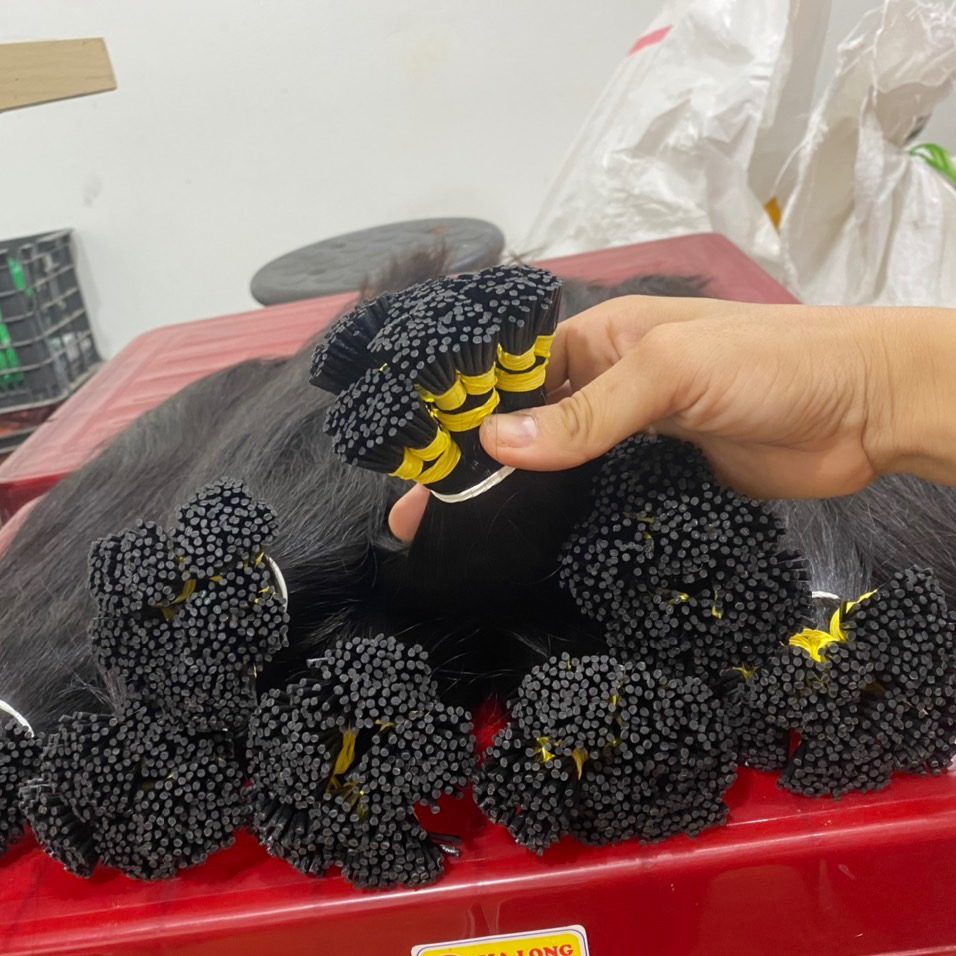
I-tip, U-tip, and nano ring are three strand-by-strand extension systems that differ mainly in how each strand attaches: U-tips fuse with heat, I-tips clamp into a bead, and nano rings clamp into a much smaller bead. All three give the natural, movable result that makes individual-strand extensions worth the install time, but they suit different hair types and salon workflows. The choice comes down to heat versus no-heat and how fine the client’s hair is.
Quick guide: choose U-tip when you want a strong heat-fused bond and the client’s hair can take it; choose I-tip for a no-heat bead install that is easy to remove and reuse; choose nano ring for the finest hair, where the smaller bead hides better. Nova produces all three tip formats, so a salon can standardize on one system or mix them.
What are U-tip extensions?
U-tip extensions are individual strands tipped with a U-shaped keratin bond that a stylist melts with a heat tool to fuse the strand to a small section of the client’s hair. The heat-fused bond is strong and long-lasting, which is why hot fusion remains popular for clients who want a durable install. A full head typically uses a large number of strands and takes a few hours to apply, and removal requires a keratin-dissolving solution. U-tips suit clients whose hair can tolerate the heat bonding.
Best for: durable installs, clients wanting a strong bond, salons equipped for hot fusion.
What are I-tip extensions?
I-tip extensions are straight-tipped strands with no adhesive, attached by clamping the tip inside a small bead (a micro-link or micro-ring) along with a section of the client’s hair. Because there is no heat or glue, I-tips are gentler to install and remove, and the strands lift out for easy reuse when the client’s hair grows out. The bead maintenance interval is similar to other individual methods. I-tips are the go-to when a stylist wants a no-heat, reusable system.
Best for: no-heat installs, easy reuse, clients who dislike bonding chemicals or heat.
What are nano ring extensions?
Nano ring extensions attach individual strands with a very small metal or silicone-lined bead clamped to the natural hair, using no heat, glue, or braiding. The nano bead is significantly smaller than a standard micro-ring, so it hides better in fine or thin hair where a larger bead would show. Install takes a few hours, and the hair is reusable with bead maintenance as the client’s hair grows. Nano rings are the finest of the three systems.
Best for: fine or thin hair, clients who need the most discreet attachment, no-heat installs.
I-tip vs U-tip vs nano ring: the comparison
| Factor | U-tip | I-tip | Nano ring |
|---|---|---|---|
| Attachment | Heat-fused keratin bond | Bead (micro-ring) | Smaller bead (nano) |
| Heat used | Yes | No | No |
| Bead size | None | Standard | Smallest |
| Best hair type | Normal to thick | Normal | Fine, thin |
| Reuse | Re-tip after removal | Easy, lift and reset | Easy, lift and reset |
| Removal | Keratin solution | Open bead | Open bead |
All three are keratin-tip or bead extensions cut from the same remy hair, so the hair quality is identical across systems. The bond method is the variable. For how these compare against tape-ins and wefts, see keratin tips vs tape-ins vs wefts.
Which tip system should you stock?
Stock the system that matches your salon’s skills and your clients’ hair, and consider carrying two. A salon set up for hot fusion and durable installs leans U-tip; a salon that prefers no-heat, reusable installs leans I-tip; and either should add nano ring for fine-haired clients a standard bead would fail. Because all three use the same hair, standardizing on one system simplifies inventory while nano ring covers the fine-hair exception. Whichever you install, all strand methods apply sustained tension, so follow the American Academy of Dermatology’s advice and give clients a break from extensions every two to three months.
Frequently Asked Questions
What is the difference between I-tip and U-tip extensions?
U-tip extensions use a keratin bond fused to the hair with heat, while I-tip extensions have a plain tip clamped into a bead with no heat or glue. U-tips give a strong, durable bond; I-tips are gentler to install and remove and lift out for easy reuse. The choice depends on whether you want heat fusion or a no-heat bead system.
Are nano rings better than micro rings?
Nano rings use a smaller bead than standard micro rings (I-tips), so they hide better in fine or thin hair where a larger bead would show. For normal or thick hair, standard micro rings work well and cost less. Nano rings are the better choice specifically when the client’s hair is fine and the attachment must be invisible.
Which strand extension is best for fine hair?
Nano ring extensions are usually best for fine hair because the small bead hides where a standard bead or keratin bond would show. They also use no heat, which is gentler on delicate hair. I-tips are a reasonable second choice; heat-fused U-tips are generally better suited to normal or thicker hair.
Can I-tip and nano ring extensions be reused?
Yes, both I-tip and nano ring extensions are reusable because they attach with beads and no adhesive, so a stylist can open the bead, lift the strand out as the hair grows, and reset it. U-tips can also be reused but require re-tipping after the keratin bond is removed. Reusability makes bead systems economical for clients over time.
Source every tip format factory-direct
Nova Hair Factory produces I-tip, U-tip, V-tip, flat tip, and nano ring keratin extensions from Vietnamese remy hair in Bắc Ninh, in the full colour palette. Message us on WhatsApp at +84 36 216 7992 for samples of each system to test with your clients.