 Nova Hair
 Vietnamese vs Chinese vs Indian Hair: Which to Source
The origin on the label matters far less than most buyers think. Vietnamese, Chinese, and Indian hair each carry a reputation, but two bundles from the same country can differ more than two bundles from opposite sides of the map, because processing and donor sourcing decide quality more than geography does. If you are choosing a supplier, judge the factory and the hair in your hand, not the country name.
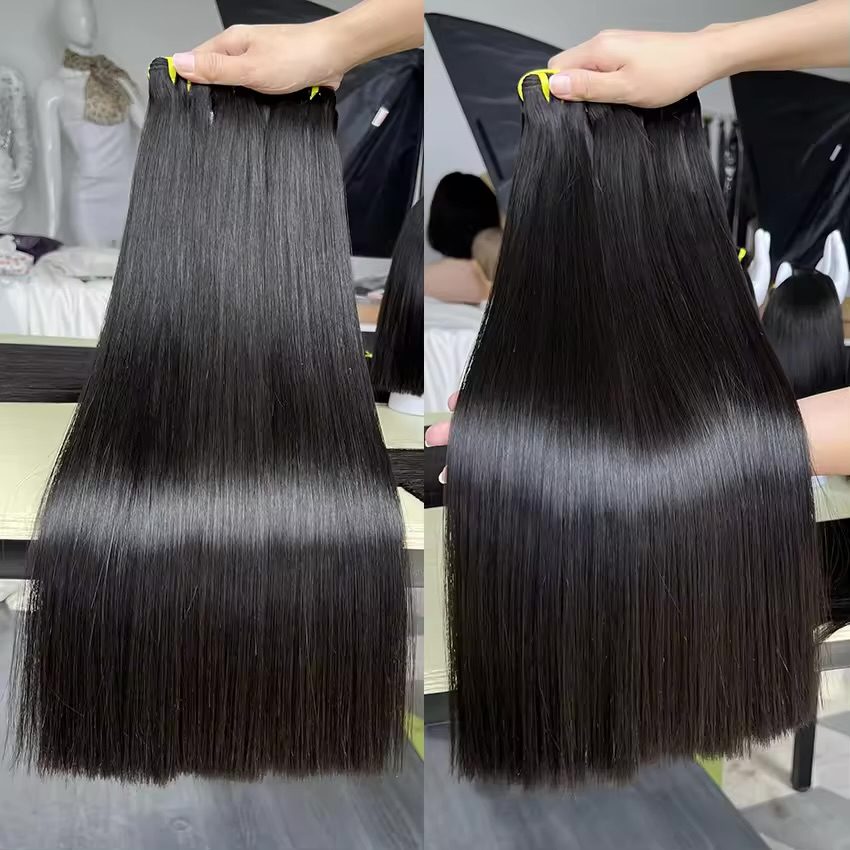
Here is the short version, self-contained so you can act on it: Indian hair is the backbone of the world’s raw-hair supply and is usually fine to medium and soft; Chinese hair is often the thickest and is more frequently processed to hit a price; Vietnamese hair is prized for thick, strong, very straight strands with minimal processing and traceable single-donor sourcing. All three can be excellent or terrible depending on the factory. Test before you commit.
What actually determines hair quality (more than country)
Three properties decide how hair behaves, and none of them is the country of origin. Learn these and you can grade any bundle regardless of where it was collected.
Raw vs virgin vs remy. Raw hair is single-donor and completely unprocessed. Virgin hair is unprocessed but may be steam-treated to set a uniform curl. Remy hair keeps the cuticle aligned root-to-tip but may come from several donors and be lightly processed. Raw sits at the top because the intact, aligned cuticle is what lets hair lift to blonde cleanly and last for years. Our guide to raw vs virgin raw bundles breaks down where each fits.
Cuticle alignment. When every strand’s cuticle runs the same direction, the hair resists tangling and sheds very little. When hair is collected off a brush or floor and mixed, the cuticles clash, and no amount of silicone coating hides that for long. This is the single biggest quality divider inside any origin.
Single drawn vs double drawn. Single drawn bundles hold mixed lengths and taper toward the tip for a natural fall. Double drawn bundles have the short strands removed by hand so they stay thick to the very end. Double drawn costs more because the sorting removes usable weight.
Get these three right and origin becomes a preference, not a quality guarantee.
Where does the world’s hair actually come from?
India supplies most of the world’s raw human hair, and the trade data is not close. In 2024, India accounted for roughly 94% of global unworked human-hair exports (HS category 0501), according to analysis of UN Comtrade data by WorldsTopExports. For dressed and worked hair (HS 670300, which mixes processed hair and finished articles), UN Comtrade data via the World Bank shows India again leading at about US$574 million in 2024, ahead of China at roughly US$209 million.
That raw-supply dominance is why so much “Indian temple hair” reaches the market. It does not mean India makes the best finished product. Raw hair travels: it is collected in one country, then often washed, sorted, wefted, and coloured in another. The factory that processes the hair shapes the result as much as the donor who grew it.
Vietnam’s place in this picture is the growth story. Vietnam was among the fastest-growing human-hair exporters between 2023 and 2024, with exports up 257% year over year (WorldsTopExports analysis of UN Comtrade data). That rise reflects a shift toward Vietnamese processing and single-donor sourcing, which is the reason many hairpreneurs who started with Indian or Chinese hair now test Vietnamese.
How do Vietnamese, Chinese, and Indian hair compare?
The table below sums up how the industry generally characterizes each origin. Treat these as widely-repeated descriptions from suppliers and stylists, not laboratory measurements, because texture and processing vary batch to batch.
| Trait | Vietnamese | Chinese | Indian |
|---|---|---|---|
| Typical strand | Thick, strong, very straight | Thickest, often coarse | Fine to medium, soft, slight natural wave |
| Processing norm | Minimal; single-donor common | More frequently processed | Ranges; temple/remy tradition |
| Lift to blonde | Lifts cleanly when raw | Varies with processing | Lifts well when remy |
| Traceability | Often single-donor, traceable | Often mixed-donor | Temple-collected or mixed |
| Best for | Sew-ins, wigs, blondes, longevity | Volume at a price point | Soft natural blends |
Notice what the table does not include: a lifespan figure. Some suppliers advertise exact month ranges by origin, but those are marketing claims with no independent source, so treat any “lasts X months by country” promise with suspicion.
Why do buyers choose Vietnamese hair?
Buyers choose Vietnamese hair when they need strength, clean lift to blonde, and traceable sourcing. Vietnamese donors rarely chemically treat their hair, so the raw strands are thick and consistent, and single-donor collection means the cuticle stays aligned. For salons whose clients want #613 platinum or long lengths that survive repeated colouring, that combination is hard to beat. We cover the full case in why salons choose Vietnamese raw hair.
When does Chinese or Indian hair make sense?
Chinese hair makes sense when a reseller needs high volume at a competitive price and the client is not bleaching to platinum. Indian hair makes sense when the goal is a soft, fine-textured blend for naturally fine hair, since Indian remy tends to be lighter in density. Both can perform well from a good factory. The risk with both is the same as with any origin: heavily processed hair sold as raw, which fails the moment a colourist bleaches it.
How to judge hair before you commit
Order samples from more than one supplier and test the hair yourself, because a photo and a country name prove nothing. Run a bleach test: genuine raw or remy hair lifts to an even blonde with no dark filler strands, while processed hair turns gummy. Slide your fingers from tip to root to feel for cuticle resistance. Our full guide to spotting fake raw hair lists every check worth running before you pay a vendor.
This is also why sourcing factory-direct beats buying through a reseller: a factory can run the bleach test on camera and show you the production floor. If you are still choosing where to buy, start with how to find a hair vendor.
Frequently Asked Questions
Which country has the best hair extensions?
No single country has the best hair, because processing and donor sourcing matter more than origin. Vietnamese hair is prized for strength and clean lift to blonde, Indian hair for soft fine textures, and Chinese hair for volume at a price. The best hair comes from the best factory in any of these countries, verified by a sample and a bleach test.
Is Vietnamese hair better than Indian hair?
Vietnamese hair is generally thicker and stronger, while Indian hair is finer and softer, so “better” depends on the client. For blonde work, long lengths, and longevity, buyers often prefer Vietnamese raw hair. For fine-textured natural blends, Indian remy can suit better. Test both before deciding.
What is the difference between raw and remy hair?
Raw hair is single-donor and completely unprocessed, while remy hair keeps the cuticle aligned but may come from several donors and be lightly processed. Raw hair lifts to the lightest blondes and lasts longest, which is why it costs more. Both outperform non-remy hair, which has clashing cuticles that tangle.
Where does the best human hair come from?
The best human hair comes from a factory that sources single-donor, cuticle-aligned hair and processes it minimally, regardless of country. India supplies most of the world’s raw hair, Vietnam is a fast-growing source of single-donor hair, and China processes at scale. Judge the factory, not just the flag.
Sourcing the right origin for your brand
Pick the origin that matches what your clients actually buy, then vet the factory hard. Nova Hair Factory produces single-donor Vietnamese raw hair bundles and bulk hair in Bắc Ninh, and runs a bleach test on camera before you pay. Message us on WhatsApp at +84 36 216 7992 for a sample and the current price list, and judge the hair yourself before any bulk order.